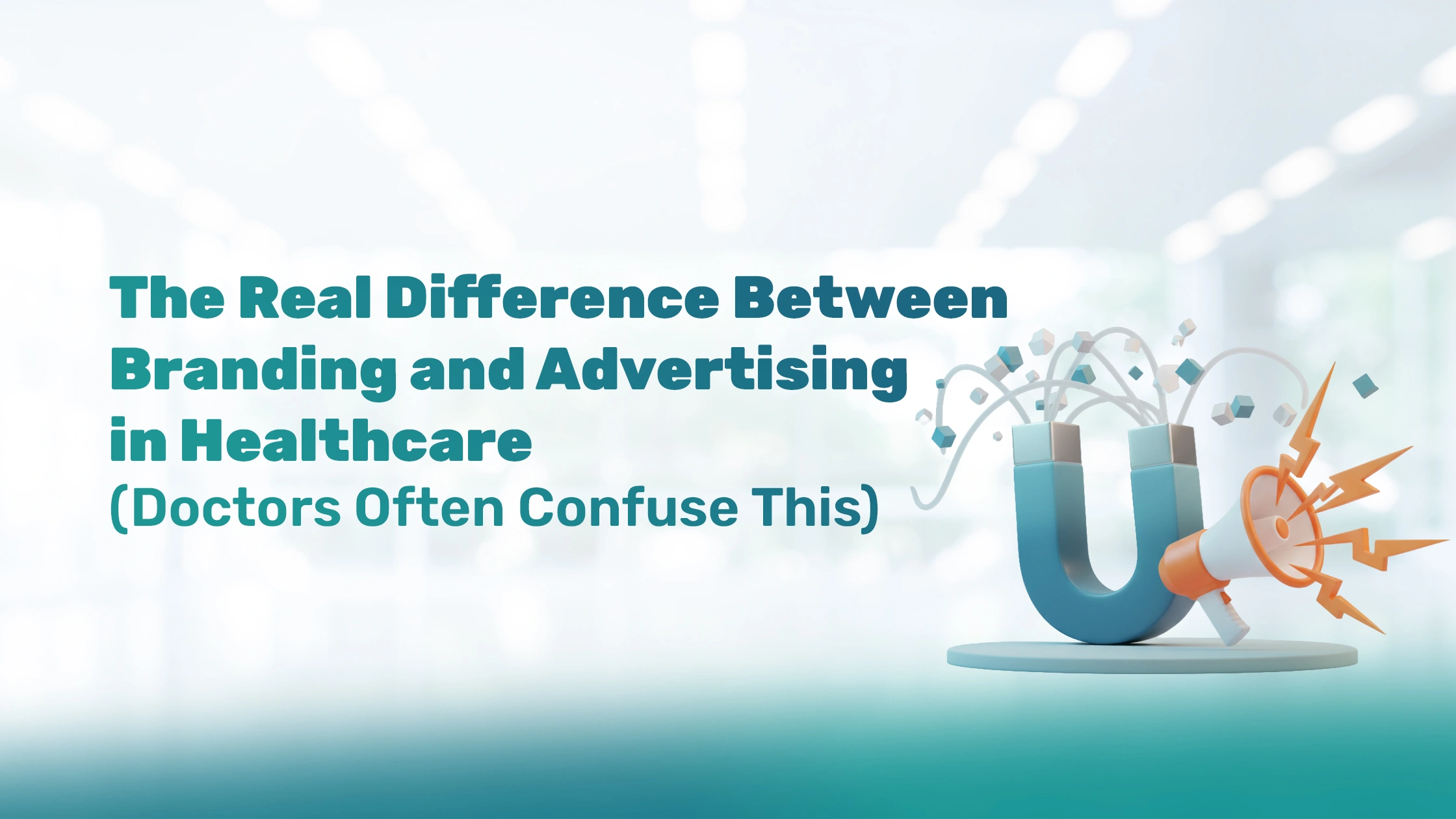
Is branding just another word for advertising, or are they actually very different things in healthcare marketing?
This confusion is extremely common among doctors and hospitals. Many believe that running ads automatically builds a brand. Others assume branding means logos and colours only. In reality, branding and advertising serve very different purposes, especially in healthcare.
Understanding this difference can completely change how doctors approach marketing — and why some see long-term success while others keep spending without lasting results.
Why This Confusion Exists in the First Place
In most industries, advertising and branding overlap heavily.
In healthcare, however, trust, ethics, and emotional reassurance make the distinction far more important.
Doctors are often pushed into advertising without first building a brand — which leads to poor conversions and frustration.
What Branding Really Means in Healthcare
Branding is not a logo.
Branding is not a colour palette.
Branding is not a tagline.
In healthcare, branding is how patients feel about a doctor or hospital before they ever meet them.
Branding Includes:
- Perception of trust and credibility
- Sense of safety and comfort
- Emotional reassurance
- Professionalism and consistency
- Reputation built over time
Branding answers the patient’s unspoken question:
“Can I trust this doctor?”
What Advertising Actually Does
Advertising is a tool not a foundation.
In healthcare, advertising’s role is to:
- Increase visibility
- Speed up awareness
- Bring attention to an existing brand
Advertising answers a different question:
“Who should I notice right now?”
Without strong branding, ads feel pushy.
With strong branding, ads feel reassuring.
Key Differences Between Branding and Advertising (Simplified)
Branding:
- Builds long-term trust
- Works silently in the background
- Improves patient confidence
- Creates recall and loyalty
- Compounds over time
Advertising:
- Delivers immediate visibility
- Stops when spending stops
- Brings traffic, not trust
- Works best short-term
- Depends heavily on branding quality
Doctors who confuse the two often overspend on ads expecting brand-level results.
Why Advertising Alone Fails in Healthcare
Many doctors experience this cycle:
- Ads bring leads
- Patients hesitate
- Conversions remain low
- Budgets feel wasted
This happens because patients do not make healthcare decisions impulsively.
Common reasons ads fail without branding:
- Website doesn’t feel trustworthy
- Social presence looks inconsistent
- Messaging feels sales-driven
- No emotional reassurance
Patients pause, research further, and often choose someone else.
Running ads or social media without a strong website is like inviting patients to a clinic with no reception.
Why Branding Without Advertising Also Has Limits
Branding alone is powerful, but slow.
Doctors who rely only on branding may face:
- Slower visibility
- Limited reach initially
- Dependence on organic discovery
That’s why healthcare marketing works best when branding comes first, and advertising follows.
How Successful Doctors Use Branding and Advertising Together
Doctors and hospitals that see consistent growth follow a clear sequence.
Step 1: Build the Brand
This includes:
- Professional website
- Clear positioning
- Uniform visual identity
- Patient-focused content
- Reputation management
Step 2: Strengthen Trust
- Educational blogs and videos
- Thoughtful social media presence
- Clear communication
Step 3: Use Advertising Strategically
- Promote awareness, not desperation
- Drive traffic to trustworthy assets
- Support growth, not force it
Advertising works best as an accelerator — not a starting point.
Common Mistakes Doctors Make
1. Treating Ads as a Shortcut
Ads cannot replace trust.
2. Spending on Ads Without Brand Clarity
Patients don’t convert if they’re unsure.
3. Measuring Branding Like Ads
Branding impact shows over months, not days.
4. Stopping Branding Because Ads Are Running
Branding must continue even when ads are active.

How Patients Actually Experience This Difference
From a patient’s point of view:
- Branding creates comfort
- Advertising creates awareness
Patients notice ads, but they decide based on branding.
They check:
- Website quality
- Reviews and testimonials
- Doctor’s communication style
- Overall professionalism
Branding influences these checks. Ads only initiate them.
Final Thoughts
In healthcare, branding and advertising are not interchangeable — they are complementary.
Advertising brings attention.
Branding builds belief.
Doctors and hospitals that understand this difference:
- Spend smarter
- Convert better
- Grow sustainably
Marketing works best when it respects how patients think and feel — not just how platforms function.