
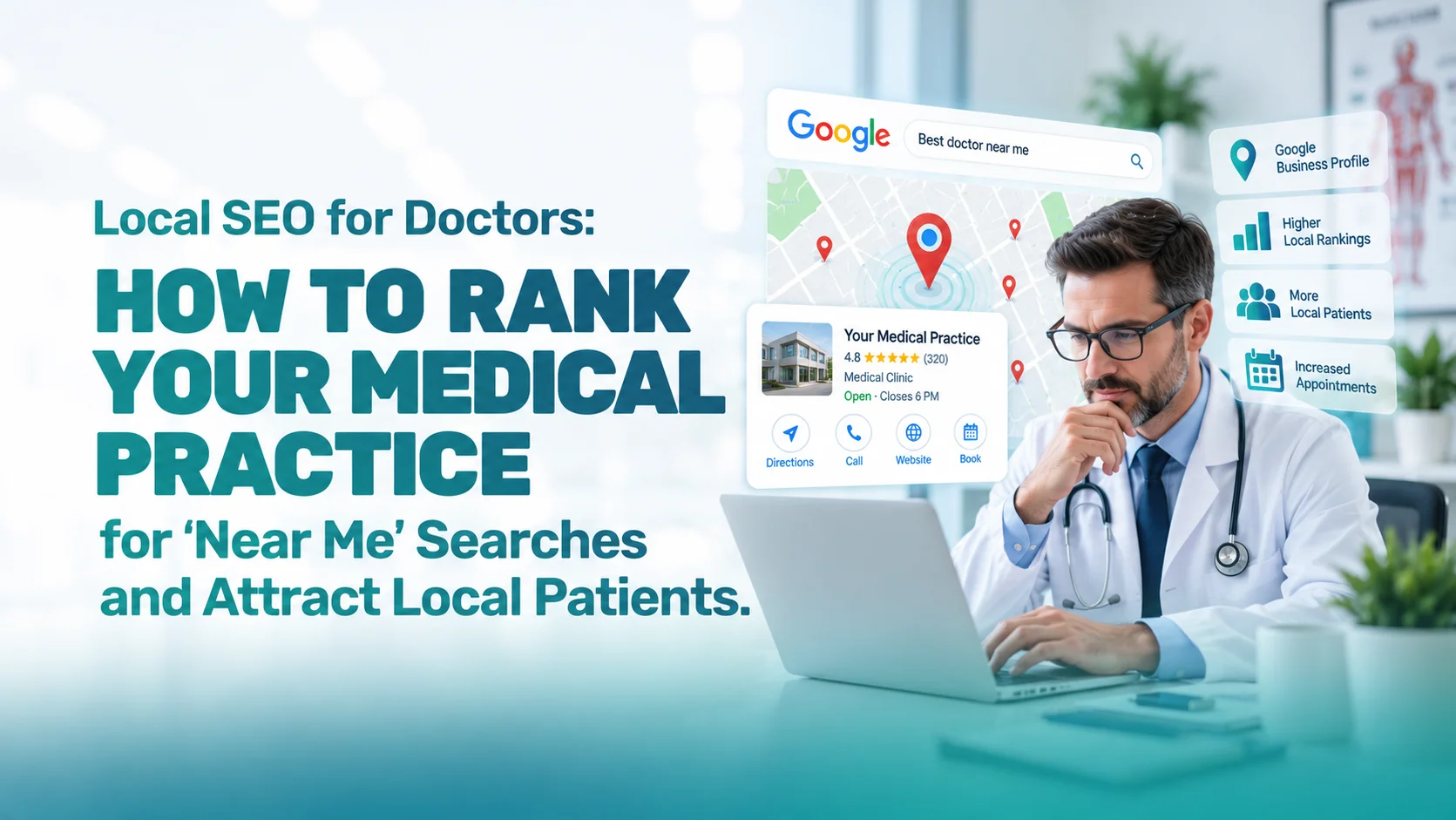
A patient develops persistent shoulder pain. Another needs a dermatologist. Someone recently diagnosed with rheumatoid arthritis wants a specialist.
One of their first actions may be remarkably simple:
They search online.
Queries such as “doctor near me,” “rheumatologist near me,” “orthopedic surgeon near me” and speciality-plus-city searches represent some of the most commercially important digital opportunities for private medical practices.
This is where local SEO for doctors becomes critical.
Unlike broad healthcare marketing, local SEO focuses on helping practices become discoverable by patients within the geographic areas they actually serve.
1. Understand Local Patient Search Intent
Not all Google searches represent equal patient intent.
Someone searching “what is rheumatoid arthritis?” may simply want information.
Someone searching “rheumatologist near me” is potentially looking for care.
A strong local SEO strategy identifies searches involving:
- Speciality + location
- Treatment + location
- Doctor + city
- “Near me”
- “Nearby”
- Appointment intent
These searches may represent patients much closer to scheduling consultations.
2. Optimise the Google Business Profile
A practice’s Google Business Profile can be one of its most valuable local discovery assets.
Information should remain accurate and consistent, including:
- Practice name
- Address
- Telephone number
- Hours
- Website
- Relevant categories
- Appointment information
Incorrect or inconsistent information creates friction for both patients and search platforms.
Practices should also maintain profiles as their hours, locations and services change.
3. Build Strong Location Pages
Multi-location medical practices should not simply list several addresses on one contact page.
Where appropriate, individual locations can have useful pages explaining:
- Address and directions
- Physicians practising there
- Relevant services
- Contact information
- Appointment options
- Local patient information
These pages should contain genuine location-specific value rather than duplicated text with city names changed.
4. Develop Treatment-Specific Local Visibility
A practice should not aim to rank only for its speciality.
Patients frequently search for specific problems.
An orthopedic practice, for example, may need visibility for searches involving:
- Knee replacement
- Hip replacement
- Sports injuries
- Shoulder pain
- Joint replacement
Combining strong treatment content with geographic relevance can create a much more valuable local medical SEO strategy.
5. Reviews Influence Patient Decisions
Local visibility gets the practice discovered.
Reputation can influence what happens next.
Patients frequently compare ratings, review volume, recent experiences and the professionalism of practice responses.
Medical practices can establish ethical processes for requesting genuine feedback from patients, while remaining mindful of privacy obligations when responding publicly.
Buying reviews or manufacturing testimonials should never be part of healthcare reputation management.
6. Keep Practice Information Consistent
Search engines encounter medical practice information across numerous online sources.
Major inconsistencies in names, addresses, telephone numbers or physician details can create confusion.
Practices should maintain consistent information across relevant directories, professional profiles and their own website.
This becomes particularly important after:
- Relocations
- New locations
- Physician additions
- Practice rebranding
- Telephone number changes
7. Create Content Around Local Patient Needs
Local SEO should extend beyond directories.
A medical practice can build useful content around questions its actual patients ask.
This could include treatment guides, FAQs, recovery information and physician-led educational content.
The goal is not to repeatedly insert a city name into articles.
The goal is to build a website demonstrating genuine relevance to the services patients within that market are seeking.
8. Track Appointments, Not Rankings Alone
Ranking highly for “doctor near me” sounds impressive.
But did those searches generate calls?
Did those calls become appointments?
Did those appointments produce appropriate patients for the practice?
Strong local SEO for medical practices should ultimately be evaluated through the patient acquisition funnel:
Local Visibility → Website/Call → Enquiry → Appointment → Patient
Final Thoughts
For many US private practices, the most valuable patient is not someone browsing medical information nationally.
It is someone nearby who needs the physician’s expertise now.
That is why local SEO for doctors should be treated as a patient acquisition strategy rather than merely a search-ranking exercise.
Strong Google Business Profile management, location architecture, treatment-specific content, reputation and technically sound SEO can work together to increase relevant local discovery.
The goal is straightforward:
When the right patient searches for the right care in your market, your practice should have a credible opportunity to be found.